


Imagine driving a car without knowing the rules of the road—or how to operate the vehicle. It’s a scary thought, right?
Now, imagine navigating your financial life with little to no understanding of budgeting, credit, or investing.
Unfortunately, that’s a reality for far too many Americans.
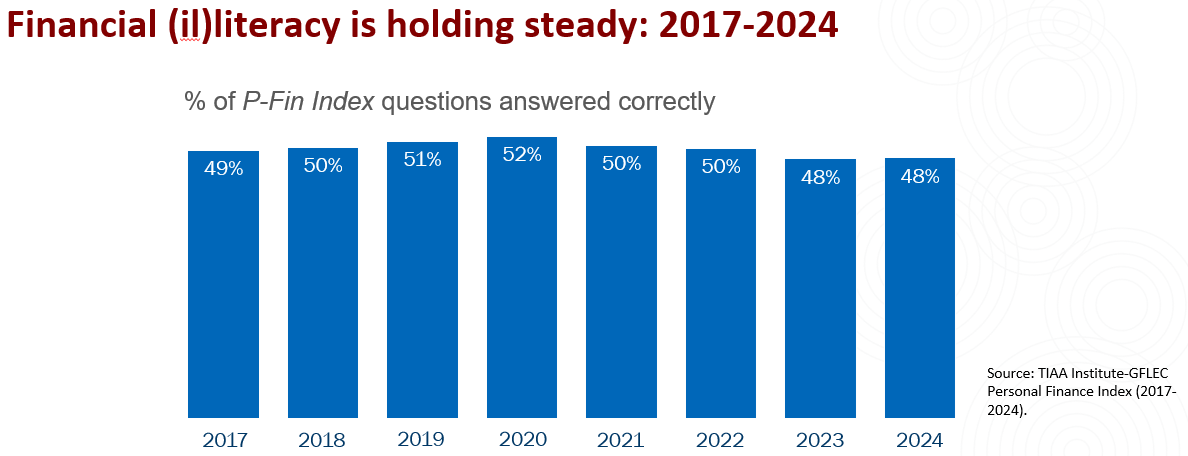
According to the 2024 TIAA Institute-GFLEC Personal Finance Index, U.S. adults correctly answered only 48% of financial literacy questions, a statistic that has remained stagnant since 2017. Respondents could answer only about half of the basic questions correctly when asked about key financial concepts like debt management, retirement savings, and budgeting.¹
This lack of financial literacy has tangible consequences.
Individuals with very low financial literacy are:
- Six times more likely to struggle with making ends meet.
- Three times more likely to be constrained by debt.
- Three times more likely to be unable to handle a $2,000 financial shock.
- Four times more likely to spend over 10 hours weekly dealing with personal finance issues.
Our Firm's Dedication to Financial Literacy
At Deschutes, financial literacy isn't just a buzzword, it's a core value that permeates every aspect of our work. Our advisors are deeply committed to empowering clients with the knowledge and tools they need to make informed financial decisions. We believe that education is the foundation of financial well-being, and we strive to integrate this belief into our services and community initiatives.
Engaging the Next Generation
Recognizing the importance of early financial education, our firm is actively involved in outreach programs aimed at young individuals. In our upcoming Deschutes Day of Service, where our employees get a paid day off to volunteer with their organization of choice, some of our employees have chosen to visit local high schools and colleges to share insights on personal finance, budgeting, and investing. This initiative reflects our commitment to fostering financial literacy from a young age.
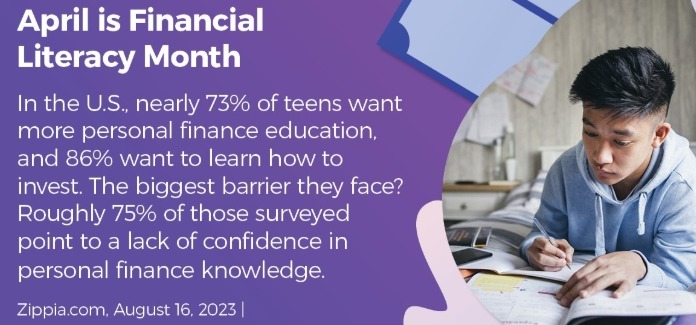
According to Zippia.com, 73% of teens want to become financially literate, and 86% are interested in learning how to invest. 75% of teens say the biggest barrier they face is their lack of confidence in their financial knowledge. It was also noted that parents are their most trusted source for financial education, and that means conversations around the dinner table matter.
Children and teens who are taught financial literacy early in life are more likely to:
- Choose lower-cost college funding options
- Avoid high-interest debt
- Build strong saving and investing habits
- It all starts with honest, open conversations—and a willingness to be their guide.
Empowering Through SMART Goals
Setting clear financial goals is crucial for success. We encourage individuals to adopt the SMART framework:
Specific: Define clear, concise objectives.
Measurable: Establish criteria to track progress.
Attainable: Set realistic goals within your means.
Relevant: Ensure goals align with your personal values and long-term plans.
Timely: Set a deadline to achieve your goals.
By applying this approach, individuals can create actionable plans that lead to tangible financial improvements.
Join Us in Promoting Financial Literacy
April is Financial Literacy Month, a time to reflect on the importance of financial education and take proactive steps toward improvement. We invite you to participate in this movement by evaluating your financial knowledge, setting SMART goals, and sharing the knowledge you have with others in your family and community.
We have many useful resources available here on our website under the Tools Tab where you can expand your financial knowledge. Check it out, and as always please feel free to contact us with any questions.
Sources:
- TIAA Institute, 2024 Financial Literacy Survey tiaa_institute_gflec_retirement_fluency_pfin_2024.pdf
- https://www.tiaa.org/public/institute/about/news/annual-report-shows-more-adults-have-very-low-financial-literacy-detriment-financial
- 20+ Compelling Financial Literacy Statistics [2023] - Zippia